Septoplasty in London
Deviated septum surgery by a consultant ENT and facial plastic surgeon
Septoplasty straightens the wall inside your nose. It is done entirely through the nostrils, leaves no external scar, and does not change how your nose looks. Day case at Weymouth Street Hospital, from £6,000, and BUPA fee-assured.
Written and reviewed by Mr David Whitehead, Consultant ENT & Facial Plastic Surgeon, GMC 4372358. Last updated .
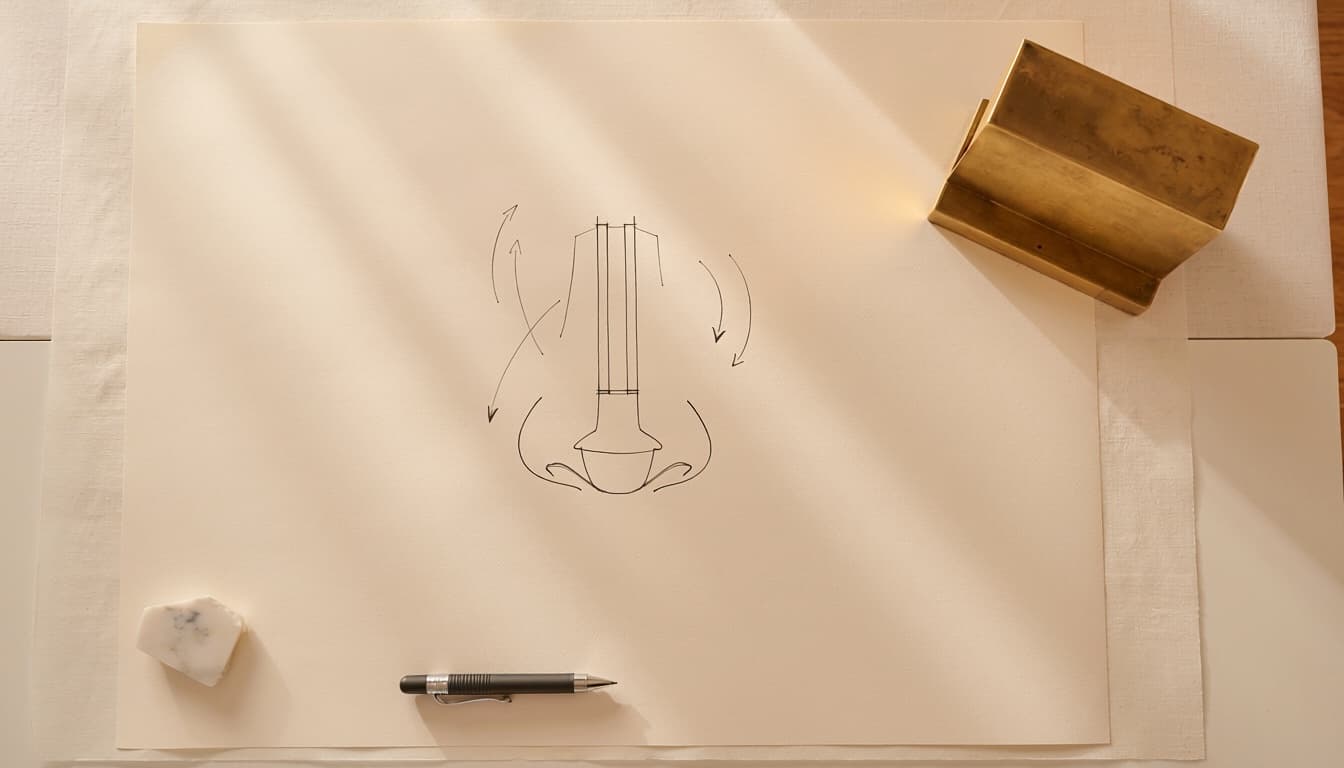
Septoplasty is structural surgery. The septum is the wall that divides the airway, and straightening it is an exercise in support as much as correction.
What is septoplasty, and how is it different from septorhinoplasty?
Septoplasty straightens the nasal septum, the central wall dividing the two sides of your nose. It is performed entirely through the nostrils, leaves no external scar, takes 45 to 75 minutes, and is done as a day case under general anaesthetic. It is functional surgery. It aims to improve breathing and does not change how your nose looks from the outside.
Septorhinoplasty is the larger operation that straightens the septum and reshapes the external nose in the same sitting. If your nose is crooked on the outside as well as blocked on the inside, septoplasty alone will not straighten the outside. That distinction matters, because the two operations carry different costs, different recovery, and different consent processes.
How do I know whether my septum is the problem?
The pattern that points to a structural cause is obstruction that is worse on one side, present all year rather than seasonally, and unchanged by antihistamines or steroid sprays used properly for a reasonable period. Blockage that swaps sides through the day is normal nasal cycling. Blockage that is always worse on the same side is more likely to be structural.
At consultation I examine the nose with a flexible endoscope, so you see what I see on the screen at the same appointment. For an isolated deviated septum that is usually enough to plan surgery. I request a low-dose CT only where there is a specific reason, such as suspected sinus disease, and where it is needed it is arranged and billed by the hospital separately.
Why does a deviated septum cause nosebleeds and crusting?
Blockage is the symptom people expect. Nosebleeds and crusting are the ones that surprise them. Air speeds up as it passes the prominent part of a bent septum, and moving air dries the lining it runs over. Dry lining crusts, the crust lifts, and the small vessels underneath bleed, which is why the bleeding tends to come from the same side each time. If you have never been able to breathe evenly through both sides and you bleed repeatedly from one nostril, those two things are usually the same story.
Whether the septum was bent by an injury or has simply grown that way, the effect on airflow is the same. If yours followed a broken nose, the timing of treatment is different, and I cover that there.
What should I try before surgery?
A properly used intranasal corticosteroid, such as mometasone or fluticasone, for at least eight weeks. Correctly means head tilted slightly forward, spray angled outward toward the cheekbone rather than at the septum, and a brief pause before breathing in. Most people use these sprays incorrectly and conclude they do not work. Saline rinsing helps, particularly where the air is dry or after pollen exposure.
If you have been using an over-the-counter decongestant spray daily for more than two weeks, that is its own problem. These sprays are licensed for about seven days. Beyond that the lining rebounds worse than before and you reach for the bottle again. The cycle is called rhinitis medicamentosa, and it needs unpicking before anyone can judge what your septum is actually doing.
What happens during the operation?
The incision is made inside the nostril. The lining is lifted off the septum on both sides, the deviated cartilage and bone are repositioned or trimmed, and the lining is laid back down. I preserve an L-shaped strut of cartilage along the top and front of the septum, because that strut is what supports the bridge and the tip. Removing too much is how a nose collapses years later, and it is the single most important judgement in the operation.
The lining is then held together with dissolving quilting sutures. That is my default. Internal splints are used where the correction warrants it, and they come out at day 7 to 10. I do not pack the nose routinely.
Do I need turbinate reduction as well?
Sometimes, and I will be straight with you about the evidence. The inferior turbinates are ridges on the side wall of the nose that swell and shrink through the day. Where a septum has been deviated for years, the turbinate on the roomier side often enlarges to compensate, and where that enlargement is genuine it may help to reduce it.
The NAIROS trial permitted turbinate reduction alongside septoplasty and did not find that it added measurable benefit over septoplasty alone. A separate study in patients who also had allergic rhinitis that had not responded to medication did find better obstruction scores when turbinate reduction was added, though quality of life measures were largely unchanged (Ghosh et al, 2023). So this is a judgement about the individual nose in front of me rather than a settled question, and I only add it where the turbinates are genuinely hypertrophic and contributing to the blockage.
In practice that works out at around half of my septoplasty cases. It is charged as an additional procedure, and you should learn that from a web page rather than from an invoice: septoplasty with bilateral inferior turbinate reduction comes to £7,100 all in, because the hospital charges separately for the turbinate work. I will tell you at consultation whether I expect to need it, and your written quote will say which figure applies to you. I also offer turbinate reduction as a standalone procedure, quoted individually.
How soon can I have surgery? Is there a cooling-off period?
There is no mandatory cooling-off period for septoplasty, because it is functional surgery and not a cosmetic procedure. The two-week reflection period you may have read about comes from the Royal College of Surgeons standards for cosmetic surgery, and it applies when someone is choosing to change how their nose looks.
Septoplasty is treatment for a breathing problem, and it follows the ordinary consent process for any therapeutic operation: I explain what is wrong, what the operation does, what it will not do, and the risks, and you decide. In practice consultation to theatre is usually four to six weeks. If you want longer to think, take it. If you are combining septoplasty with cosmetic work, the cosmetic part does carry the two-week reflection period.
What does recovery actually look like?
- Days 1 to 3: the nose feels blocked, because it is swollen inside. This is the part people misread as the operation having failed. Saline rinsing, head elevated, no nose blowing.
- Day 7 to 10: review, and splints removed if they were used. Breathing starts to open up from here.
- Week 2: most people doing desk work are back. Two weeks is the figure to plan around when booking time off.
- Week 4 to 6: gentle exercise from four weeks, anything heavy or with impact risk from six.
- Three months: the breathing reaches its settled state. Recovery varies between individuals and these timings are a guide, not a schedule.
Avoid flying for the first week. After your one-week review, short haul travel is usually fine. Tell me at the review if you are planning long haul or travelling sooner, and I will advise you individually.
What are the risks?
The commonest disappointing outcome is not a complication. It is incomplete relief: the airway is better but not as much better as hoped. Causes include incomplete correction, persistent turbinate enlargement, collapse of the nasal valve that was not addressed, or coexisting allergy that was never the structural fault in the first place.
I would rather give you the real numbers than reassuring ones. In the NAIROS trial, 4 percent of patients who had septoplasty were readmitted with bleeding, and 12 percent needed antibiotics for an infection. Published series put septal perforation at around 2 to 3 percent and septal haematoma, which needs urgent drainage, at around 2 percent. Persistent crusting or dryness, and changes in the sense of smell which are usually temporary but can rarely be permanent, are also recognised. Very rarely, removing too much cartilage changes the external shape of the nose. All of this is in the written consent document you take home.
Turbinate reduction carries its own small risks: bleeding, crusting, and, where too much tissue is removed, a persistently dry nose. This is why I reduce turbinates rather than remove them.
Who is septoplasty not right for?
I would rather say no than operate on the wrong problem. Septoplasty is the wrong operation when:
- the obstruction is allergic rather than structural, and medical treatment has not genuinely been tried properly
- the dominant problem is the nasal valve rather than the septum, in which case straightening the septum alone will disappoint
- the nose is crooked on the outside and that is what bothers you, which is a septorhinoplasty question
- the expectation is that surgery will treat obstructive sleep apnoea. Septoplasty can reduce nasal snoring and can make CPAP easier to tolerate, but it is not a treatment for obstructive sleep apnoea
- there has been previous nasal surgery with significant cartilage loss, or a persistently dry nose, where further surgery may make symptoms worse
Can a teenager have septoplasty?
Sometimes, but it is judged case by case rather than by age alone. The septum grows with the face, and operating too early risks disturbing that growth. Where a teenager has genuine, persistent obstruction that has not responded to medical treatment, and growth is largely complete, surgery can be appropriate. I assess each young person individually, with a parent or guardian present throughout, and I am equally willing to say that waiting is the better option.
Who will do the operation, and where in London?
I am Mr David Whitehead, a Consultant ENT and Facial Plastic Surgeon in London (GMC 4372358). My training is in both halves of this problem: ENT and rhinology, which is the breathing, and facial plastic surgery, which is the structure. Septal surgery sits exactly where the two meet, which is why I would rather assess your airway properly than treat a deviated septum as a routine list item.
- Consultations: 9 Harley Street and 25 Harley Street, London W1. An initial consultation is £250, and includes examination of the nose with an endoscope where that is useful.
- Surgery: Weymouth Street Hospital, London W1G 6NP. Septoplasty is a day case, so you go home the same day.
- Afterwards: I see you in clinic at one week and again at six weeks. For self-pay patients both reviews are included in the quoted fee. If you are insured, follow-up appointments are billed to your insurer under the usual codes rather than wrapped into a fixed fee. Either way you get a single email address that reaches my practice rather than a call centre.
- Correspondence: with your consent I write to your GP after the consultation, and to any other healthcare professional involved in your care, so that everyone looking after you has the same information I have. If you would rather I wrote to nobody, say so and I will not.
One practical point worth asking any London surgeon, not only me: find out who will actually be operating, and whether the fee you have been quoted is that surgeon's fee or a hospital package price. The two are often not the same figure.
How I decide whether septoplasty is the right operation
Septoplasty is one of the most common procedures in ENT, and the decision matters more than the technique. As an ear, nose and throat specialist my approach at the first appointment is to establish what the difficulty actually is. A fixed nasal blockage that is worse on one side points to the septum. Repeated sinus infections, crusting or facial pressure suggest the septum is only part of the picture, and simpler treatments such as sprays and saline rinses deserve a proper trial before any surgical procedure.
Septoplasty does not change the appearance of your nose, and the results of a good septoplasty are deliberately invisible: the nose looks the same, it simply works. Where breathing and shape both matter, it can be combined with rhinoplasty as septorhinoplasty. Experience counts here less in the operating theatre than in the judgement of when not to operate. If you are paying for private surgery, septoplasty with me starts at £6,000, most UK health insurance policies cover it subject to pre-authorisation, and most people in desk jobs return to work within about two weeks.
Can I get septoplasty covered by BUPA?
Usually, yes. Septoplasty is functional surgery, not cosmetic surgery, so BUPA and the other major UK insurers treat it as eligible treatment subject to your policy terms and any excess. The route is a referral from your GP or another specialist, followed by pre-authorisation from BUPA before the consultation and again before surgery. I am a BUPA-recognised, fee-assured consultant, which means BUPA pays my surgeon's fee in full and there is no shortfall on it. The consultant anaesthetist bills separately and is not always fee-assured, so ask about that fee before you book.
Without insurance, septoplasty with me starts at £6,000 as a self-pay day case. If you are thinking of combining septoplasty with cosmetic changes to the outside of the nose, your insurer will only ever fund the functional part, and I ask every patient in that position to obtain written confirmation from their insurer of exactly what is covered before booking a date.
Septoplasty: common questions
How much does septoplasty cost in the UK?
Does BUPA cover septoplasty?
Will septoplasty change the shape of my nose?
Is septoplasty painful?
Can a deviated septum come back after septoplasty?
Can I get septoplasty on the NHS?
Does septoplasty actually work?
How long will I need off work?
Sources
- Carrie S, O'Hara J, Fouweather T, et al. Clinical effectiveness of septoplasty versus medical management for nasal airways obstruction: multicentre, open label, randomised controlled trial. BMJ. 2023;383:e075445. doi:10.1136/bmj-2023-075445
- Carrie S, Fouweather T, Homer T, et al. Effectiveness of septoplasty compared to medical management in adults with obstruction associated with a deviated nasal septum: the NAIROS RCT. Health Technol Assess. 2024;28(10):1-213. doi:10.3310/MVFR4028
- Ghosh SK, Dutta M, Haldar D. Role of bilateral inferior turbinoplasty as an adjunct to septoplasty in improving nasal obstruction and subjective performance in patients with deviated nasal septum associated with allergic rhinitis. Ear Nose Throat J. 2023;102(7):445-452. doi:10.1177/01455613211015440
- Dabrowska-Bien J, Skarzynski PH, Gwizdalska I, et al. Complications in septoplasty based on a large group of 5639 patients. Eur Arch Otorhinolaryngol. 2018;275(7):1789-1794. doi:10.1007/s00405-018-4990-8
- NHS England. Referral to Treatment (RTT) Waiting Times Statistics, May 2026. Published 9 July 2026. england.nhs.uk
Written by Mr David Whitehead, Consultant ENT and Facial Plastic Surgeon, GMC 4372358. Last reviewed 6 August 2026.
Find out whether your septum is the problem
A £250 consultation includes nasendoscopy, so you see the inside of your own nose on the screen at the first appointment. If septoplasty is not the right operation for you, I will tell you.