Last verified: 5 October 2026. Every figure reviewed and approved by Mr David Whitehead.
October 2026 edition of the NOSE London UK Rhinoplasty Price Index, compiled by Mr David Whitehead, Consultant ENT and Facial Plastic Surgeon. Every price in this edition was read from the provider's own official website on 5 October 2026. First published 8 May 2026; second edition 30 July 2026. Next edition: January 2027.
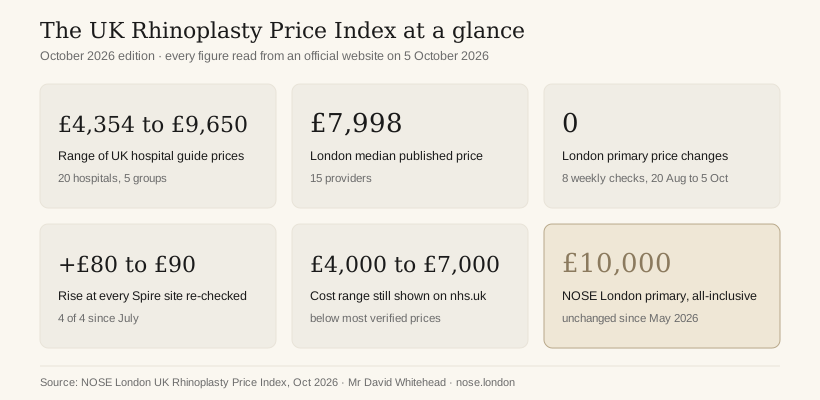
How much is a nose job in the UK? According to the NOSE London UK Rhinoplasty Price Index (October 2026, Mr David Whitehead), published hospital guide prices for primary rhinoplasty run from £4,354 to £9,650 across 20 UK hospitals, or from £5,060 where the hospital states that the surgeon, anaesthetist and aftercare are included. In London, 16 providers publish a primary rhinoplasty price, from £6,400 to £12,500, with a median of £7,998. Revision rhinoplasty in London is published at £8,500 to £15,000.
That is the short answer to the cost of rhinoplasty in the UK. The long answer is below, along with something the short answer hides: what the price actually buys, and how often the price you read online is not the price you will be quoted.
Key findings, October 2026
The October 2026 edition of the NOSE London UK Rhinoplasty Price Index found:
- The London market has stopped moving. After a summer in which the best-known Chelsea price rose 15.9%, not one of 12 tracked London providers changed its primary rhinoplasty price across eight weekly checks between 20 August and 5 October 2026.
- Spire raised its prices everywhere we looked. All four Spire hospitals re-checked since July rose by £80 to £90: Cardiff £6,722 to £6,802, Southampton £7,070 to £7,150, Leeds £8,488 to £8,578 and Manchester £8,943 to £9,033.
- London is no more transparent than it was in May. Of the same 25 named London rhinoplasty consultants, 12 (48%) showed a surgical price on their own website in May 2026, and 12 (48%) do now. One practice stopped publishing; one started.
- Five providers publish two different prices for the same thing. One hospital's nose surgery page says closed rhinoplasty from £6,900 while its own price list says £7,500. One London clinic shows £5,800 on its homepage and £6,400 on its rhinoplasty page. One still prices septorhinoplasty below its own primary rhinoplasty.
- Ramsay Health Care has started publishing. In July it was enquiry-only. Two Ramsay hospitals now show prices from £4,354 and £5,360, the lowest figures in this edition, though neither page says what is included.
- The NHS figure is out of date. nhs.uk still tells patients rhinoplasty costs £4,000 to £7,000. Published prices are above the top of that range at 11 of the 20 hospitals and 12 of the 16 London providers in this index.
Who compiles this index, and why
I am Mr David Whitehead, a Consultant ENT and Facial Plastic Surgeon (FRCS ORL-HNS, GMC 4372358). I run NOSE London from 9 Harley Street and 25 Harley Street and operate at Weymouth Street Hospital.
In May 2026 I read the published prices of every named rhinoplasty consultant in London I could find and wrote down what each one charged, with the date I read it. To our knowledge, this is the first rhinoplasty price index written by a UK surgeon that compares named London consultants' published prices, with every figure dated and re-checked each quarter. In July I extended it hospital by hospital across the national hospital groups. This October edition is the third.
I do it because a £10,000 medical purchase deserves better information than this market gives patients. I also have an obvious interest, so I will be plain about it: my own primary rhinoplasty fee is £10,000, which is above the London median. You will find it in its own clearly labelled section further down, separate from everyone else's figures.
How to cite this index: Whitehead D. NOSE London UK Rhinoplasty Price Index, October 2026 edition. nose.london, verified 5 October 2026. The full dataset is available as a CSV file.
How the index works
- Rule: a price counts only if it appears in the live text of the provider's own official website on the verification day. No aggregators, no review sites, no search snippets, no "a patient told me."
- Sample (October 2026): 63 official provider pages, read on 5 October 2026. That covers 20 hospitals across five hospital groups, two national cosmetic chains, 16 London providers that publish a primary rhinoplasty price, and the London consultants who do not.
- Continuity: the same 25 named London consultants have been checked in every edition since May, so transparency can be compared like for like. Between editions, 12 London providers are tracked weekly by automated capture, and any change is re-read by hand.
- Anonymisation: individual surgeons and single London clinics are anonymised, in line with advertising guidance. Hospital groups and national chains are named, because their prices are institutional facts any patient can check in one click.
- Corrections: if a figure turns out to be wrong, I correct it and say so. There is one correction in this edition, below.
What a nose job costs across the UK (verified 5 October 2026)
| Provider | Primary rhinoplasty, published | What the page says is included |
|---|---|---|
| Ramsay, Rowley Hall (Stafford) | from £4,354 | Not stated |
| Circle Health, Ross Hall (Glasgow) | £5,060 | Treatment, consultation, aftercare |
| Circle Health, Dundee | £5,060 | Treatment, consultation, aftercare |
| Circle Health, Albyn (Aberdeen) | £5,110 | Treatment, consultation, aftercare |
| Ramsay, Park Hill (Doncaster) | from £5,360 | Not stated (open rhinoplasty from £7,892) |
| Spire Bristol | £6,046 | Consultant, anaesthetist, aftercare to 14 days |
| Nuffield Health Wolverhampton | £6,105 | Guide price |
| Spire Cardiff | £6,802 | As other Spire sites |
| London Private Hospital | from £6,900 | Package price |
| Manchester Private Hospital | from £6,900 or £7,500 | Two pages disagree (see below) |
| Spire Southampton | £7,150 | As other Spire sites |
| Nuffield Health Glasgow | £7,440 | Guide price; consultation from £120 |
| Spire London East | £7,593 | As other Spire sites |
| Spire Little Aston | £7,701 | As other Spire sites |
| Nuffield Health Tees | £8,035 or £8,305 | Two unlabelled tables on one page |
| Spire Parkway | £8,176 | As other Spire sites |
| Spire Leeds | £8,578 | As other Spire sites |
| Nuffield Health Brentwood | £8,765 | Guide price |
| Harley Medical Group | from £8,995 | Consultation, procedure, stay, aftercare |
| Spire Manchester | £9,033 | As other Spire sites |
| Nuffield Health Bristol | £9,240 | Guide price |
| MYA Cosmetic Surgery | from £9,495 | Free consultation, aftercare |
| Nuffield Health Newcastle | £9,650 | Guide price |
| Hospital of St John & St Elizabeth (London) | "from £3,000" | Hospital charges only. Not comparable |
| Spire Edinburgh | enquiry-only | "We can't display a fee for this procedure just now" |
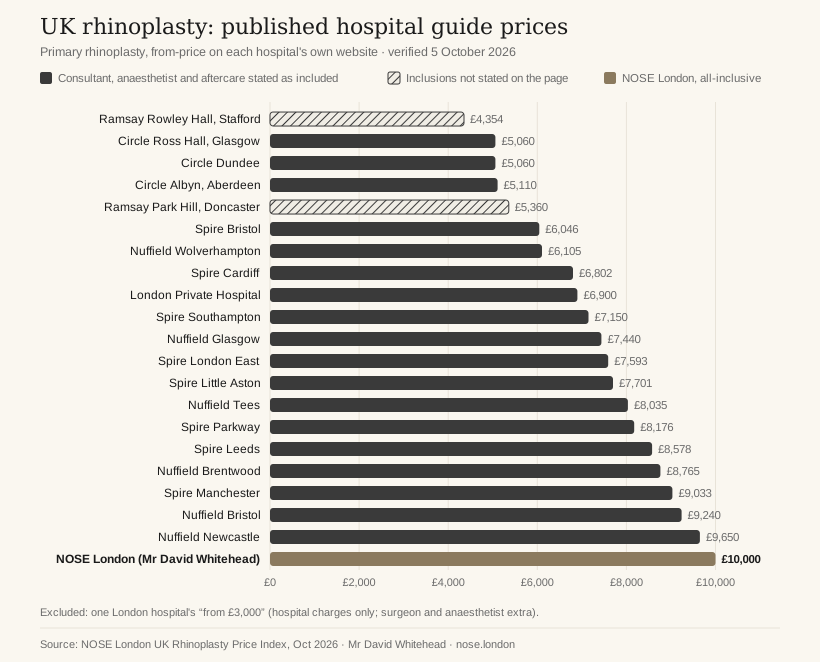
These are other providers' published prices, not NOSE London's; my own fees are in their own section below. Three things stand out.
The spread inside one company is bigger than the spread between regions. Spire's eight published hospitals run from £6,046 in Bristol to £9,033 in Manchester: £2,987 for the same operation under the same brand. If you are flexible about where you travel, comparing hospitals inside one group will save you more than comparing London with "the regions."
The cheapest numbers need the most reading. The two lowest figures in this edition, at Ramsay hospitals, do not say what they include, and Ramsay's national page says patients need a medical or psychological reason to be eligible. The London "from £3,000" price is not a price for an operation at all. It covers the hospital's share and nothing else.
Northern England is not cheap. Spire Manchester (£9,033) and Nuffield Newcastle (£9,650) are both within £1,000 of my all-inclusive Harley Street fee.
The London price ladder
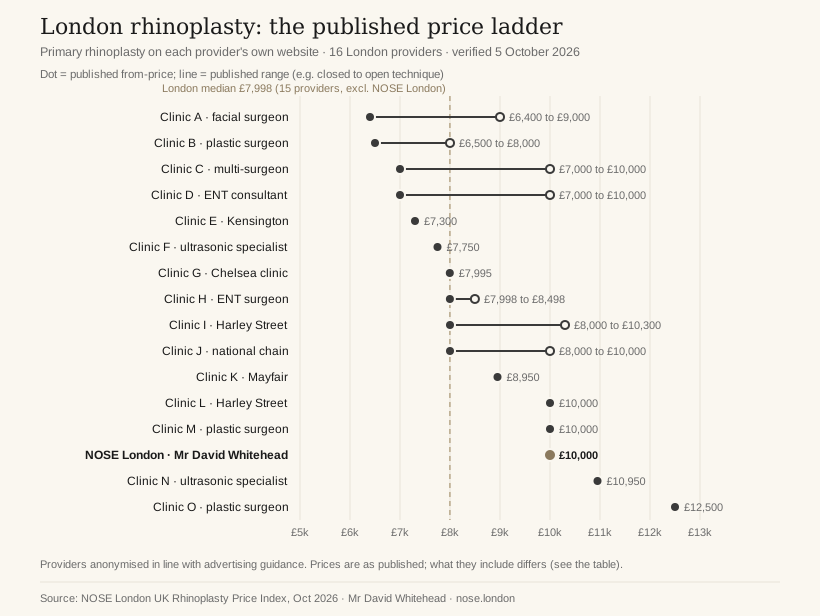
In the October 2026 NOSE London Price Index, sixteen London providers publish a price for primary rhinoplasty on their own websites, from £6,400 to £12,500, with a median of £7,998. Here they are, cheapest first. Apart from the row marked NOSE London, every figure in this section belongs to another provider.
| Tier | Published London primary price (5 Oct 2026) | Who is in it |
|---|---|---|
| Lower London | £6,400 to £7,750 | Closed-technique "from" prices, multi-surgeon clinics, one all-inclusive ultrasonic specialist |
| Mid London | £7,995 to £8,950 | A Chelsea clinic, an ENT surgeon, a national chain, and the only fixed all-inclusive London price found (£8,950) |
| Upper London (where I sit) | £10,000 | Two other London providers and NOSE London |
| Top London | £10,950 to £12,500 | Ultrasonic and plastic-surgery specialists; their revision prices reach £15,000 |
Revision rhinoplasty, where published in London: £8,500 (ultrasonic, no grafts), £9,950, £10,995, £11,500 (with cartilage grafts), £12,500 and £15,000, plus a rib-graft surcharge of £2,750 at one practice. Septorhinoplasty is published from £6,500 to £13,500, though the £6,500 figure sits below that same practice's own primary rhinoplasty price.
Consultation fees run from £100 (credited against surgery at two practices) through £240 to £250 and £275, up to £300 and £350. One national chain offers a £25 first meeting with a patient coordinator, not a surgeon.
What moved since May
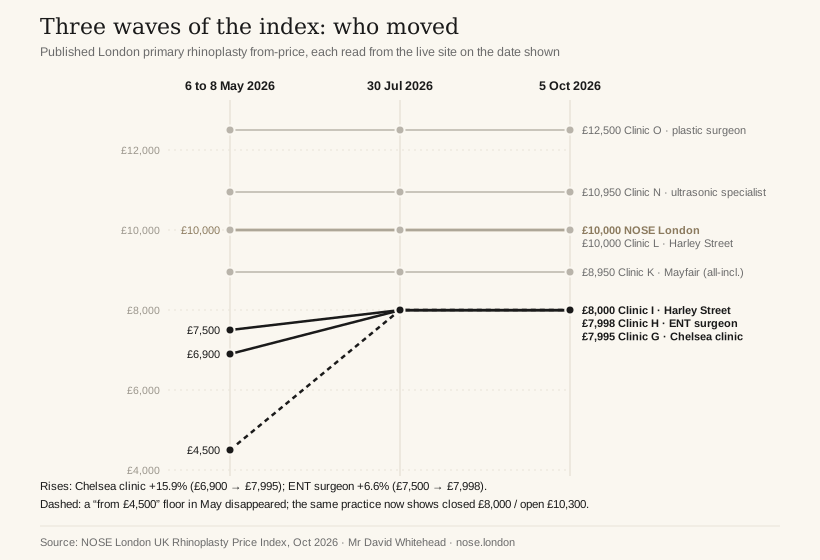
Across the three editions of the NOSE London Price Index (May, July and October 2026), London rhinoplasty prices rose in the spring and then stopped moving. Here is the change, edition by edition.
| Change | May 2026 | July 2026 | October 2026 |
|---|---|---|---|
| Chelsea clinic, primary | £6,900 | £7,995 | £7,995 |
| Chelsea clinic, revision | £9,500 | £10,995 | £10,995 |
| ENT surgeon, closed primary | £7,500 | £7,998 | £7,998 |
| Harley Street practice, lowest "from" | £4,500 | £8,000 (closed) | £8,000 (closed) |
| Facial surgeon practice | no price | £5,800 to £9,850 | £5,800 (homepage) or £6,400 (rhinoplasty page) |
| Practice showing £8,000 to £20,000 | published | no price | |
| Spire, four hospitals | £6,722 to £8,943 | £6,802 to £9,033 | |
| Ramsay Health Care | enquiry-only | from £4,354 at two hospitals | |
| NOSE London, primary | £10,000 | £10,000 | £10,000 |
The pattern is a spring rise followed by an autumn freeze. Between May and July the low end of London repriced upwards: the cheapest headline figures disappeared and two providers rose, by 6.6% and 15.9%. Since late August, nothing in London has moved. The national groups are still creeping up, slowly.
My reading, for what it is worth: the providers who were furthest below the market moved up to meet it in the spring, and the market is now settled around £8,000. I would not expect large London moves before the new year. The January edition will show whether I am right.
A correction to the July edition. The July edition reported that a practice which published prices in May had gone enquiry-only and that its domain no longer resolved. That practice had moved to a different web address, where it still publishes the same price it did in May: £7,300. I apologise for the error, and it is corrected here.
Is London becoming more transparent? Not yet
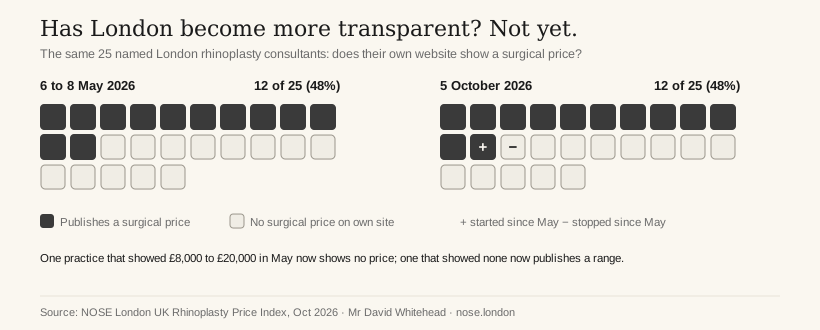
The NOSE London Price Index tracks the same 25 named London rhinoplasty consultants in every edition, and 12 of them (48%) publish a surgical price on their own website, exactly as in May. When I first published this index I hoped that putting prices side by side would nudge more London surgeons to publish theirs. Five months later, the count has not moved: 12 of 25, or 48%, in both May and October. One practice started publishing a range. Another, which in May showed £8,000 to £20,000, now shows nothing.
Some of the most widely known rhinoplasty surgeons in London still publish no surgical fee at all. Several state, reasonably, that every nose is different. That is true. It is also true of every other surgeon on the ladder above, and they publish a starting price anyway.
What has improved is the hospital side: Ramsay, enquiry-only in July, now publishes prices at hospital level.
And where prices are published, they are not always checked. In this edition alone:
- A Manchester hospital's nose surgery page (marked reviewed on 5 October) says closed rhinoplasty from £6,900 and septo or secondary rhinoplasty from £11,900. Its own price list, last updated 8 August, still says £7,500 and £9,900.
- A London clinic's homepage says £5,800 to £9,850. Its rhinoplasty page says £6,400 to £9,000.
- A London practice prices septorhinoplasty from £6,500, below its own closed primary rhinoplasty at £8,000.
- A national chain's rhinoplasty page says £6,295 in the body text and £5,995 in its own FAQ, on the same page.
- A Nuffield hospital page shows two different rhinoplasty price tables, £8,035 and £8,305, without saying which applies.
None of these is sinister. They are what happens when nobody reads their own pricing pages side by side. But if you are comparing quotes, you should know that the price you read online may not be the price on the next page of the same website.
Why the NHS figure misleads
The NHS website still says rhinoplasty costs £4,000 to £7,000 in the UK. It also says rhinoplasty is not usually available on the NHS for cosmetic reasons, but may be provided if it is needed to help you breathe. The second statement is still right. The first is out of date: published prices are above £7,000 at 11 of the 20 hospitals and 12 of the 16 London providers in this edition. The page's own scheduled review date, 22 September 2026, has passed.
Why the price range is so wide
Rhinoplasty is among the most technically demanding operations in cosmetic surgery. A millimetre of misjudged cartilage is visible for life. The range reflects real differences in what you are buying.
1. The surgeon
Training pathway, volume and specialisation all matter. I am dual-trained in ENT, the specialty of the nose and airway, and in facial plastic surgery. I hold the RCS Intercollegiate Board Certificate in cosmetic surgery of the face, nose, periorbital region and ears. After consultant training I completed a rhinology fellowship in Manchester and a European Academy of Facial Plastic Surgery fellowship in Istanbul. Plastic surgeons who specialise in the nose also produce excellent results. The difference matters most when the nose also has to breathe, or when something needs putting right.
2. The hospital
The same operation varies by almost £3,000 between hospitals in one group. I operate at Weymouth Street Hospital, part of Phoenix Hospital Group. It is rated Good by the CQC, and on PHIN 99% of 3,439 patients said their experience there was very good or good. Whoever you see, look up the hospital they operate at on the CQC and PHIN websites before you pay.
3. The technique
Ultrasonic rhinoplasty (piezo) reshapes bone with high-frequency vibration rather than a chisel. In this edition one Chelsea clinic prices it at £400 above its standard rhinoplasty, while three specialists price it as their default, at £7,750, £10,950 and £12,500. Preservation rhinoplasty works beneath the nasal framework rather than removing tissue. My own ultrasonic rhinoplasty is from £10,500, £500 above my standard primary fee, with the piezo instrument included. Technique typically changes the price by hundreds of pounds, not thousands.
4. The complexity of your nose
A straight septum and a modest hump is a different operation from a previously broken nose with valve collapse, or a deviated septum that has to be straightened at the same time. Most published "from" prices describe the simpler end. Your quote after consultation may be £1,000 to £3,000 higher.
5. The operation you actually need
Rhinoplasty is performed under general anaesthetic, usually as a day case, and the length of time the team spends in theatre drives much of the price. Closed rhinoplasty, through incisions inside the nostrils, is usually shorter than an open septorhinoplasty that rebuilds the bridge and corrects breathing at the same time. Theatre time costs money. Several providers in this index publish a closed price and an open price; the open one is £500 to £2,300 higher. Ask which one your "from" price describes.
What your fee should include
A £7,995 quote and an £8,950 quote can describe almost the same operation. The difference is often what is bundled in. This edition found every variant in live use: fixed all-inclusive fees, guide prices with 14 days of aftercare, "from" prices that do not say what they include, and one hospital price that excludes the surgeon.
| Component | Share of a complete fee (NOSE London cost model) | What it pays for |
|---|---|---|
| Surgeon | about 45% | The operation, consultations and 12 months of follow-up |
| Hospital | about 31% | Theatre, ward, nursing, recovery |
| Anaesthetist | about 9% | Assessment, anaesthesia, recovery care |
| Indemnity | about 7% | The surgeon's cover for complications and claims |
| Consumables and follow-up | about 8% | Splints, dressings, review appointments |
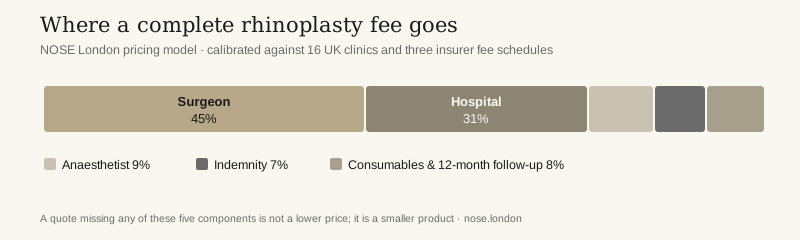
Things that should not cost extra: the consultation (or it should be credited), splints, dressings, suture removal, and follow-up for at least the first six to twelve months. Things that reasonably cost extra: rib cartilage grafts in complex or revision cases, an unplanned overnight stay, and travel.
The hidden costs almost nobody mentions
Revision surgery
The most-cited study of cosmetic rhinoplasty revision, Neaman and colleagues in Aesthetic Surgery Journal (2013), followed 369 consecutive cosmetic rhinoplasties and found a revision rate of 9.8% (DOI). Roughly one patient in ten has a second operation.
So ask every surgeon what happens if you need one. London revision prices in this index run from £8,500 to £15,000. Even where a surgeon waives their own fee, the hospital and anaesthetist will usually charge. And read revision cover carefully: one Manchester hospital's "2 years" is revision cover, not two years of follow-up appointments.
My own policy: if revision is needed within 12 months of your operation, I do not charge for my own time. Weymouth Street Hospital and the anaesthetist bill separately for theirs. After 12 months, revisions are priced case by case.
Insurance
Private medical insurers do not cover cosmetic rhinoplasty. Functional surgery to help you breathe, such as septoplasty, is usually eligible with pre-authorisation, and some insurers will fund the functional part of a combined operation while you self-fund the cosmetic part. Rules differ by insurer: AXA Health's published schedule, for example, says a nasal obstruction alone does not make septorhinoplasty eligible. I am fee-assured with BUPA, which means my surgeon's fee for BUPA-covered procedures is the BUPA-listed amount, with nothing extra on top. Before you book with anyone, ask: "Are you fee-assured with my insurer?"
Consultations and follow-ups
A free first consultation can still be the expensive option if the second consultation, imaging and pre-operative meeting each cost extra. Published consultation fees in this edition run from £100 to £350, and some are credited against surgery while others are not. Always ask: "What is the total I will pay before I am booked for surgery?"
Aftercare beyond the first months
Your nose keeps settling for up to 18 months. Aftercare included in published prices ranges from 14 days at one hospital group to 12 months at several London practices. Ask whether a review at month 9 or 12 is included.
Paying for it: finance options
Some providers in this index advertise medical finance alongside their prices. Finance can be a sensible way to spread the cost, but it is important to read the APR and the total amount repayable before you sign, and to be wary of any offer that makes the monthly figure the reason to book. At NOSE London we can give you details of regulated finance providers on request, so contact us if you would like to discuss the options. In general, I would rather a patient waited a few months than borrowed in a hurry for surgery that will last a lifetime.
What about Turkey?
Istanbul rhinoplasty packages are advertised at a fraction of London prices, and Turkey has some outstanding surgeons. I trained in Istanbul myself, on a European Academy of Facial Plastic Surgery fellowship, so I know the best of them well. The cheapest package is rarely the same product, though. Before you book, check who the surgeon is, how they are regulated, what indemnity cover applies if something goes wrong, and what revision would cost you, including flights. London revision prices in this index run from £8,500 to £15,000. I have written about this in detail on my cosmetic surgery in Turkey page.
NOSE London's own prices (Mr David Whitehead)
These are my fees, as published on my pricing page and verified against this index on 5 October 2026. They are not part of the market figures above. Any other figure quoted in this article belongs to another provider.
| Procedure | NOSE London price |
|---|---|
| Initial consultation | £250, credited to surgery |
| Primary rhinoplasty | from £10,000 |
| Septorhinoplasty | from £10,500 |
| Revision rhinoplasty | from £12,000 |
| Tip rhinoplasty | from £8,000 |
| Alar base reduction | from £4,500 |
| Septoplasty (functional) | from £6,000, BUPA fee-assured |
| Ethnic rhinoplasty | from £10,500 |
| Ultrasonic rhinoplasty | from £10,500, piezo instrument included |
My fees include the surgeon, the consultant anaesthetist, the Weymouth Street Hospital day-case fee, pre-operative consultations and imaging, splints and dressings, and 12 months of follow-up. Take-home medicines, an unplanned overnight stay, rib grafts if required, and travel are extra and are set out in your written quote.
Why I am not the cheapest
Of the 15 other London providers that publish a primary rhinoplasty price, 11 publish a lower starting price than mine, two match it, and two are higher. At £10,000 I sit about £2,000 above the London median.
There are three reasons. First, my price is all-inclusive, with 12 months of aftercare, where many lower figures are "from" prices for closed technique or exclude follow-up. Second, I publish one fee and stand by it, rather than quoting each patient whatever the market will bear, which means my figure has to cover the average case fairly. Third, I operate at Weymouth Street Hospital, rated Good by the CQC, where 99% of 3,439 patients surveyed by PHIN rated their experience good or very good.
If you want the cheapest rhinoplasty in London, I am not your surgeon, and this index will show you where to look. If you want a transparent, all-inclusive fee from a dual-trained ENT and facial plastic surgeon, I think £10,000 is fair.
What to do next
- Set your budget with this index. For London, plan around £8,000 to £12,500 for primary surgery, all-in. Outside London, £6,000 to £9,650.
- Check the surgeon on the [GMC register](https://www.gmc-uk.org/registration-and-licensing/the-medical-register). Look for FRCS (ORL-HNS) or FRCS (Plast), and whether they hold the RCS Intercollegiate Board Certificate in cosmetic surgery.
- Check the hospital on CQC and PHIN. Both are free and public.
- Get an itemised quote in writing. Surgeon, hospital, anaesthetist, follow-up period, revision policy and anything excluded.
- Compare like with like. Line every quote up against the fee table above. Cheaper quotes are usually missing components rather than delivering them more efficiently.
- Check the date on any price you read, including this page. Several figures from the May edition of this index are already out of date.
If you would like to start with me, my consultation is £250 and is credited to surgery if you go ahead. You can book online or call 020 7183 0220. I see patients at 9 Harley Street and 25 Harley Street.
Whoever you choose, please do not choose on price alone. Prices vary depending on the surgeon, the hospital and your nose, but what you are really buying is safety and good outcomes. The final result of nose reshaping takes 12 to 18 months to settle, so judge each quote on what it will offer you across that whole journey, not just on the day of surgery. The biggest predictor of regret after rhinoplasty is not what you paid. It is choosing the wrong surgeon for your nose.
Frequently asked questions
How much is a nose job in the UK in 2026?
According to the NOSE London UK Rhinoplasty Price Index (October 2026), published hospital guide prices for primary rhinoplasty run from £4,354 to £9,650 across 20 UK hospitals, or from £5,060 where the surgeon, anaesthetist and aftercare are stated as included. Most fall between £6,000 and £9,000. London providers publish £6,400 to £12,500.
How much does a nose job cost in London?
Sixteen London providers publish a primary rhinoplasty price, from £6,400 to £12,500, with a median of £7,998 (verified 5 October 2026). The only fixed all-inclusive London price found is £8,950. NOSE London (Mr David Whitehead) charges from £10,000, all-inclusive.
What is the cheapest rhinoplasty in the UK?
The lowest published figures in October 2026 are £4,354 and £5,360 at two Ramsay hospitals, which do not state what is included, and £5,060 at Circle Ross Hall in Glasgow and Circle Dundee, which include the consultation and aftercare. A London hospital's "from £3,000" excludes the surgeon and anaesthetist, so it is not a full price.
How much is a rhinoplasty consultation on Harley Street?
Published London rhinoplasty consultation fees run from £100 to £350 (verified 5 October 2026): £100 at three practices (credited against surgery at two of them), then £240, £250, £275, £300 and £350. Some are credited against surgery and some are not. NOSE London's consultation with Mr David Whitehead at 9 Harley Street is £250, credited to surgery if you go ahead.
How much does tip rhinoplasty cost in London?
Published London tip rhinoplasty prices run from £4,995 to £8,000 (verified 5 October 2026): £4,995 at a Chelsea clinic, £5,000 at a multi-surgeon clinic and £7,950 at a Mayfair practice. NOSE London's tip rhinoplasty is from £8,000, all-inclusive. A tip-only operation leaves the bridge alone, so it is shorter and cheaper than full rhinoplasty.
How much does septoplasty cost privately in the UK?
Published private septoplasty prices run from £2,926 to £6,795 (verified 5 October 2026): £2,926 at Circle Ross Hall in Glasgow, from £3,395 at Ramsay Park Hill, £4,000 to £5,000 and £4,500 to £6,500 at two London practices, and £6,795 at a national chain. NOSE London's septoplasty is from £6,000 all-inclusive, and Mr David Whitehead is fee-assured with BUPA. Check whether a low figure includes the surgeon and anaesthetist.
How much does deviated septum surgery cost privately in the UK?
Deviated septum surgery is a septoplasty: straightening the wall between the two sides of the nose so you can breathe. Privately it costs £2,926 to £6,795 at published UK prices (verified 5 October 2026), or more if the turbinates are reduced at the same time (£5,500 to £7,500 at one London clinic; £7,100 at NOSE London). Because it treats a breathing problem, it is usually covered by private medical insurance with pre-authorisation.
How much is a nose job in Manchester and the north of England?
Spire Manchester publishes £9,033, Spire Leeds £8,578, Nuffield Tees £8,035 or £8,305, and Nuffield Newcastle £9,650 (verified 5 October 2026). Manchester Private Hospital shows £6,900 on one page and £7,500 on another. Realistically, plan for £7,000 to £9,650 in the north.
How much does revision rhinoplasty cost?
London revision rhinoplasty is published at £8,500 to £15,000, plus up to £2,750 for a rib graft where needed. National chains publish secondary rhinoplasty from £12,995. NOSE London's revision fee is from £12,000.
How much does septorhinoplasty cost?
Published London septorhinoplasty prices run from £6,500 to £13,500, and one Manchester hospital now shows £11,900 for septo or secondary rhinoplasty. NOSE London's septorhinoplasty is from £10,500. If part of the operation is to help you breathe, your insurer may fund that part.
Have rhinoplasty prices gone up in 2026?
Yes, then they stopped. Between May and July 2026 the lower end of the London market rose, including a 15.9% rise at a well-known Chelsea clinic. Since late August no tracked London provider has changed its primary price. Spire's hospitals rose by £80 to £90 between July and October.
Is rhinoplasty covered by insurance?
Cosmetic rhinoplasty is not covered by UK private medical insurers. Surgery to correct breathing, such as septoplasty, usually is, with pre-authorisation, and some insurers will fund the functional part of a combined operation. Rules differ: AXA Health's schedule says a nasal obstruction alone does not make septorhinoplasty eligible.
Can I have a nose job on the NHS?
Only for functional reasons. The NHS says rhinoplasty is not usually available for cosmetic reasons but may be provided if it is needed to help you breathe. Note that the £4,000 to £7,000 private cost range on nhs.uk is below many current published prices.
Who publishes the UK Rhinoplasty Price Index?
Mr David Whitehead, Consultant ENT and Facial Plastic Surgeon at NOSE London (nose.london), 9 Harley Street. He first published it on 8 May 2026 and re-verifies every price from official websites each quarter. The October 2026 edition was verified on 5 October 2026.
What does the NOSE London £10,000 fee include?
The surgeon, the consultant anaesthetist, the Weymouth Street Hospital day-case fee, pre-operative consultations and imaging, splints and dressings, and 12 months of follow-up. The £250 consultation is credited to surgery. Take-home medicines, an unplanned overnight stay, rib grafts if needed, and travel are extra.
How do I avoid hidden costs in a rhinoplasty quote?
Ask for an itemised quote in writing covering the surgeon, hospital, anaesthetist, follow-up period and revision policy. Ask whether a "from" price is for closed or open technique. Check whether the consultation is credited. If a price is far below everything in this index, check whether it includes a surgeon at all.
Editions and changes
| Edition | Verified | Main changes |
|---|---|---|
| May 2026 | 6 to 8 May 2026 | First edition: 25 named London consultants, 8 UK chains |
| July 2026 | 30 July 2026 | 12 London practices re-verified; 6 national hospital groups added hospital by hospital |
| October 2026 | 5 October 2026 | 63 official pages; 20 hospitals across 5 groups; 16 London providers with published prices; same 25-consultant transparency cohort; weekly tracking since 20 August; correction to the July edition; downloadable dataset |
Mr David Whitehead is a Consultant ENT and Facial Plastic Surgeon (BSc, MBBS, MSc, FRCS ORL-HNS, GMC 4372358) at NOSE London, 9 Harley Street and 25 Harley Street, London. He operates at Weymouth Street Hospital. He completed a rhinology fellowship in Manchester and a European Academy of Facial Plastic Surgery fellowship in Istanbul, and holds the RCS Intercollegiate Board Certificate in cosmetic surgery of the face, nose, periorbital region and ears. He compiles the NOSE London UK Rhinoplasty Price Index. Read more on the about page.
Sources: prices read from each provider's own official website on 5 October 2026 (October edition), 30 July 2026 (July edition) and 6 to 8 May 2026 (May edition); weekly automated capture of 12 London provider pages from 20 August 2026, with changes re-read by hand. [NHS](https://www.nhs.uk/conditions/cosmetic-procedures/nose-reshaping/) cosmetic procedures guidance; [PHIN](https://www.phin.org.uk/) and [CQC](https://www.cqc.org.uk/) public hospital profiles; Neaman KC et al., Cosmetic rhinoplasty: revision rates revisited, Aesthet Surg J 2013;33(1):31 to 37 ([DOI](https://doi.org/10.1177/1090820X12469221)). Providers' figures are reported as published and may change; always confirm directly with the provider. Next edition: January 2027.